
Installing a washing machine correctly is essential to prevent leaks, flooding, and premature wear on the appliance. Proper plumbing setup ensures efficient drainage and water supply, extending the life of your machine while protecting your home from water damage.dgfloors+1
Pre-Installation Preparation
Before beginning installation, turn off the main water supply and unplug any existing washer. Pull the old machine away from the wall carefully, laying towels beneath to catch residual water. If you're installing new plumbing, ensure you have a dedicated ¾-inch hot and cold water supply with shut-off valves, plus a 2-inch diameter standpipe drain extending 18–30 inches above the floor.dgfloors+2
Check that your new washing machine's dimensions fit the allocated space with at least 1 inch of clearance on all sides for ventilation. Most manufacturers recommend positioning the drain hose between 39 inches (1 meter) and 96 inches from the floor to prevent siphoning.coastappliances
Connecting Water Supply Hoses
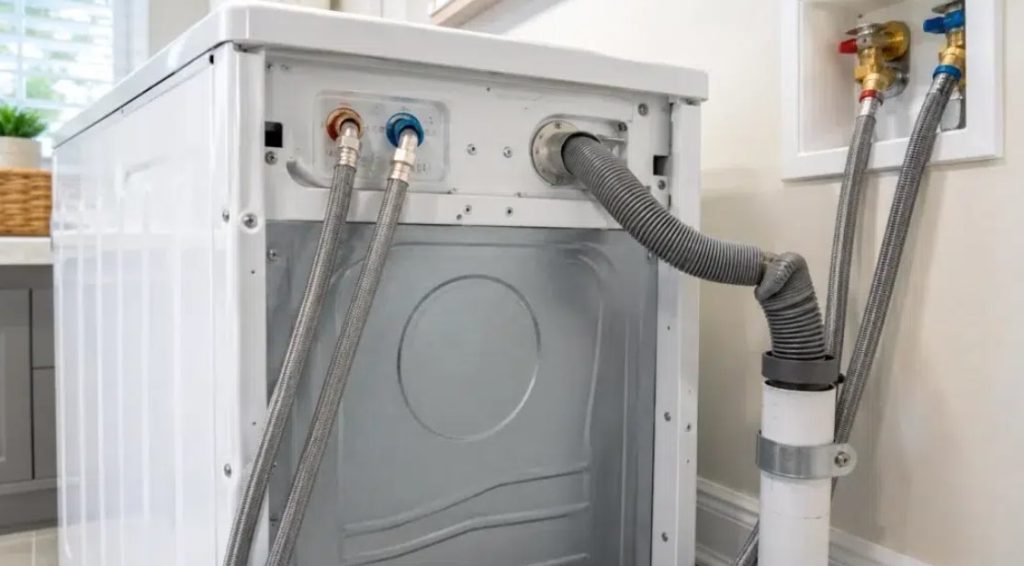
Modern washing machines use standard ¾-inch garden hose thread connections. Attach the hot water hose (typically red-coded) to the hot supply valve and the cold hose (blue-coded) to the cold valve. Hand-tighten each connection until snug, then give an additional quarter-turn with pliers—avoid overtightening, which can damage rubber washers.dgfloors+1
Connect the opposite ends to the washing machine's inlet ports, usually labeled "H" and "C" or color-coded on the back panel. Ensure hoses aren't kinked or pinched behind the machine, as this restricts water flow and increases pressure on connections.dgfloors
Drain Hose Installation
The drain hose is critical for proper wastewater removal. Attach one end firmly to the washing machine's drain port, securing it with the provided metal clamp or jubilee clip. For standpipe drains, insert the hose 4–6 inches into the pipe—no deeper, as this can cause siphoning and backflow issues.plumbingtipstoday+3
If draining into a utility sink, use the included U-bracket or elbow to hook the hose over the sink edge, ensuring the end faces downward. Secure the hose with a cable tie or safety chain to prevent it from vibrating out during spin cycles. Never lay the drain hose flat on the floor, as this creates a siphon effect that can continuously drain water from the machine.dgfloorsyoutube
Leveling and Testing
Use a spirit level to check the machine's balance side-to-side and front-to-back. Adjust the leveling feet by turning them clockwise to raise or counterclockwise to lower until the bubble centers. An unlevel washer causes excessive vibration, noise, and premature bearing wear.lowesyoutube
Once leveled and connected, turn on both water supply valves slowly. Check all connections for leaks before running a test cycle. Run an empty hot wash to flush out manufacturing residues and verify proper drainage. Listen for unusual noises during the spin cycle, which may indicate shipping bolts weren't removed or the machine needs re-leveling.hoover-home+1
Common Installation Mistakes to Avoid
-
Overtightening hose connections: This compresses rubber washers unevenly, causing leaks
-
Inserting drain hose too deep: More than 6 inches into standpipes creates siphoning
-
Skipping the drain hose bracket: Without proper elevation, water continuously drains
-
Ignoring leveling: Causes vibration damage and walking during operation
-
Using old hoses: Replace rubber supply hoses every 3–5 years to prevent burst failures
For Nairobi homeowners, consider installing stainless steel braided hoses instead of standard rubber ones—they're more resistant to Kenya's variable water pressure and last significantly longer.youtube
Professional vs. DIY Installation
While basic installation is straightforward for those comfortable with plumbing, complex setups involving new pipework, relocating valves, or installing standpipes may require a licensed plumber. In Kenya, improper plumbing can void appliance warranties and cause costly water damage in multi-story buildings.dgfloors
If you're unsure about drainage slope requirements, venting, or local building codes, consult a professional. Many appliance retailers in Nairobi offer installation services that include proper hookup, leveling, and a warranty on their workmanship.
Proper washing machine installation protects your investment and prevents expensive water damage. Take time to follow each step carefully, and your appliance will serve you reliably for years.