
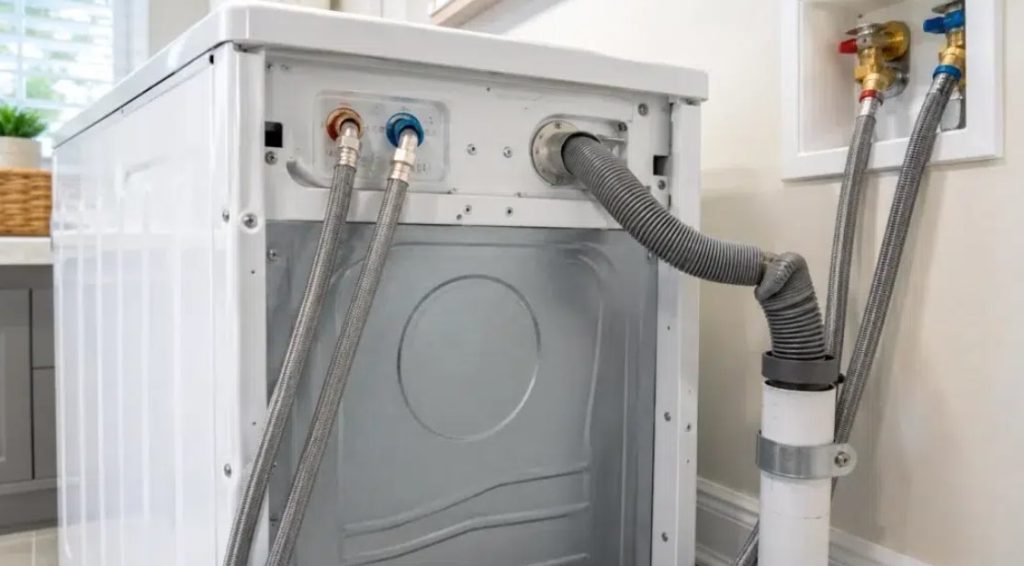
A washing machine drain standpipe should be 18 to 42 inches (457–1,067 mm) above the trap weir, with the trap itself positioned 6 to 18 inches above the finished floor. In practical terms, most installations aim for a standpipe top between 30 and 48 inches from the floor, which balances code compliance with manufacturer specifications.
Why Standpipe Height Matters
The standpipe height serves two critical functions:
-
Prevents siphoning: If the drain is too low (below the washer tub's flood rim), water can continuously siphon out as the machine fills, wasting water and potentially causing the pump to overwork.
-
Maintains trap seal: Proper height ensures the P-trap retains its water seal, preventing sewer gases from entering your home while allowing wastewater to flow freely.
Code Requirements vs. Manufacturer Specifications
Plumbing codes (International Residential Code, Uniform Plumbing Code) set the baseline:
-
Minimum: 18 inches above trap weir
-
Maximum: 42 inches above trap weir
-
Trap height: 6–18 inches above floor
Manufacturer specifications often exceed code minimums:
-
Whirlpool: Minimum 39 inches from floor
-
GE: Minimum 30 inches (or lower with anti-siphon clip securing hose at top)
-
Maximum: 96 inches for most brands
Best Practice for Kenyan Installations
For Nairobi homes and similar setups, aim for a standpipe height of 36 to 42 inches (900–1,067 mm) from the finished floor. This falls safely within both code requirements and most manufacturer ranges, providing a reliable buffer against siphoning while remaining accessible for maintenance.
Additional Installation Tips
-
Drain hose insertion: Insert the drain hose 4–6 inches into the standpipe—no deeper, to avoid siphoning.
-
Hose loop: Secure the drain hose at the top of the machine's back panel (per manufacturer instructions) before it drops into the standpipe, creating an anti-siphon loop.
-
Standpipe diameter: Use a minimum 2-inch diameter pipe to handle high-volume discharge without backing up.
-
Venting: Ensure the standpipe is properly vented through the roof or connected to a vented system to prevent airlock and slow drainage.
Always check your specific washing machine's installation manual, as high-efficiency models may have unique height requirements. If your existing standpipe falls outside these ranges, consult a licensed plumber to adjust the installation and prevent potential flooding or drainage issues.